Thursday, July 7, 2011

Should Winnipeg Ownership Be Under Fire?

The Winnipeg Jets have only officially been in existence for a few weeks now after the NHL Board of Governors unanimously approved the sale and relocation of the Atlanta Thrashers to the True North Sports & Entertainment group in Winnipeg. But since the franchise has moved, management has made several questionable decisions.

One of the latest was release of Thrashers coach Craig Ramsay, who has been in hockey for 40 years since playing with the Buffalo Sabres. He coached in Buffalo, Florida, Ottawa, Philadelphia, Tampa Bay and Boston with a couple of cameos as an interim head coach with the Flyers and Sabres. But Ramsay was not kept on in Winnipeg, much to his dismay.

Ownership didn't contact Ramsay about the position--his position--for over a month before he had to interview for his own job. Ramsay was terminated and has since signed on to be Kevin Dineen's assistant in Florida. But the process left a bitter taste in Ramsay's mouth.

From the Sportsnet article by Mike Brophy:


Was he disappointed at not being retained, but replaced by Claude Noel?

"Not at the end of it, I certainly wasn’t," Ramsay said. "I never got a phone call from the Winnipeg people when they apparently bought the team. None of us did. There are always three choices: ‘We want you; we don’t want you or we really don’t know at this point because we don’t have a general manager in place.’ At least then the communication is open and you’ve spoken to the (new owners) and that didn’t happen. It’s disappointing. I think with 40 years in the business you deserve a call from them to let you know where things stand and where they think they are headed.

"The fact that they dragged it out meant there were jobs that were going by the wayside while we were under the assumption that perhaps Winnipeg was interested in bringing our group along. It was a month or more just sitting by the phone waiting for things to happen while you are under obligation not to talk to other teams because of tampering charges. (General manager) Rick Dudley was at least let go right away so he could go about his business, but you have good people like (assistant coaches) Mike Stothers and John Torchetti and the training staff sitting there waiting for some indication as to what was going on. When Kevin Cheveldayoff got the (GM) job he at least called right away. Other than that we were just sitting there and waiting and that’s not fair."

Ramsay, along with his assistants Mike Stothers and John Torchetti, were all released. GM Rick Dudley was released as well and was hired by Toronto in their hockey operations department. But was Ramsay right in his disdain?

True North, in fairness to Ramsay, should have alerted him right away if he wasn't the guy. It was evident from the get-go that the Jets wanted things done their way. They brought in their own GM in Kevin Cheveldayoff, their own coach (from True North's Manitoba Moose) in Claude Noel, and they cleaned house right down to the equipment manager. In Ramsay's defense, he deserved an answer earlier when more head coaching vacancies were available.
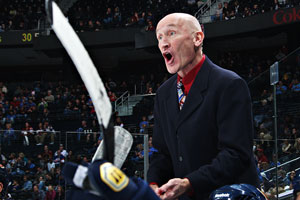
Craig Ramsay is again out of a head coaching job.  (Getty Images)
It appears True North are ready to do things their way, which is fine. But their decision making has been questionable. After charging exorbitant prices for their season tickets (the best seat in the house costs over $25,000 over 5 years) the Jets inexplicably drafted Mark Schiefle in the first round of the NHL Entry Draft with their seventh overall pick. While Schiefle should be a fine player, most scouts had him going more towards the middle of the first round than the beginning. Then, as free agency hit, the Jets made their big splash by signing Winnipeg native Derek Meech and former Manitoba Moose forwards Tanner Glass and Rick Rypien.

Is it fair to say that True North just want to sit on the cash cow that will be Winnipeg hockey over the next five years? I mean, why not? The building is basically guaranteed to be sold out for half a decade, no matter what team is iced. And if the team is going to be mediocre, why not bring in local favorites in Meech, Glass, and Rypien? Why not bring in a local coach in Noel? Noel will do a fine job, but Craig Ramsay, a man of unparalleled hockey knowledge and one of the best teachers in the game, was hung out to dry. After being in the NHL as long as the Jets owners have been alive, Ramsay at least deserved the respect to be notified before all of the coaching vacancies were filled.

As Paul Friesen in the Winnipeg Sun wrote in early June:

Except tell Ramsay, who has another year on his contract, that he’s going to at least get an interview.
Isn’t that the very least the guy deserves, given his tenure in the league?
Before his one season with Atlanta, Ramsay spent three in Boston, six in Tampa Bay (where he won a Stanley Cup), two in Philadelphia (where he went 16-8-1 and reached the Eastern Conference Final as the head coach while Roger Neilson was being treated for cancer), two in Ottawa, two more in Florida (where in 1993 a ruptured ulcer nearly killed him) and seven in Buffalo, where he’d spent his entire 14-year playing career as one of the NHL’s top defensive forwards.
To me, that’s worthy of more than a token interview.
And Friesen couldn't have been more right. Dudley, Ramsay, Stothers and Torchetti deserved better fates. Maybe they weren't going to be kept around. Heck, maybe they weren't the right people for the job. But True North has gone about their proceedings in a slightly suspect way since bringing hockey back to Winnipeg. Their underhanded treatment of the coaching staff is a poor way to start off a franchise and frankly, the Winnipeg team as is is a borderline playoff team. By sitting on their roster and not making any significant improvements, one can't help but at least begin to wonder about their motives moving forward. After all, no matter how rabid the fan base they will only support mediocrity for so long.

Wednesday, July 6, 2011

Dust Settles on Free Agency: Winners and Losers

Well, it's that time of year again. The time of year where absurd contracts clutter the Twitter feeds and where average players pull in superstar dollars, especially in this year's weak market. The 2011 free agent market was more of a slender one, with Brad Richards headlining and a significant drop-off thereafter. But teams lined up to snag pieces they felt could help their squads. Without further ado, the biggest winners and losers of the 2011 free agent frenzy:

BIGGEST WINNERS


1. The Washington Capitals 


Capitals GM George McPhee pulled some strings this year in improving Washington after another playoff flame-out in the second round. McPhee moved goaltender Semyon Varlamov to Colorado for a first- and second-round pick, which is mind-boggling because Colorado could have submitted an offer sheet for Varlamov and probably pried him away for a second-round pick. Puzzling indeed. Then, McPhee added Tomas Vokoun to stabilize the crease, who, despite being 35, is an excellent pick-up for Washington at only $1.5 million.

They then filled some minor holes throughout their roster and added depth, something an NHL team can never have enough of. Roman Hamrlik is a nice addition to Washington's blue line where his hard shot can be an asset on the power play. Washington then acquired Troy Brouwer from Chicago for a 1st round pick (who just agreed on a two-year, $2.35 milion per deal),  which was expendable because of the Varlamov trade (the Colorado pick could very well end up being a lottery pick). With Brouwer the Capitals get a gritty winger who won a Stanley Cup in Chicago last spring. The Caps are hoping to avoid another playoff disappointment and went along way to doing so over the past week.

2. The Florida Panthers


When you think about it logically, the Florida Panthers essentially did this over the course of free agency: added a bunch of high-priced, over-paid hockey players that most rational NHL teams would refuse to do. The problem is, however, is that Florida had no choice. Florida added Ed Jovanovski (4 years/$16.25 million total), Sean Bergenheim (4 years/$11 million), Tomas Fleischmann (4 years/$18 million), Tomas Kopecky (4 years/$12 million and Scottie Upshall (4 years/$18 million). The Panthers then traded for Brian Campbell, who despite his exorbitant salary (5 years remaining on his contract at $7.14 million) and Kris Versteeg (1 years left at $3.083 million).

Even if they had to overpay, it's worth it. Florida haven't made the playoffs in a decade and have slipped into anonymity. If anything, the acquisitions give Florida credibility in a division they haven't competed in for years, even when it was considered the "Southleast" division a few years back. With all the roster turnover, Florida may struggle out of the gate. But the moves that new GM Dave Tallon has made will go a long way into helping Florida regain some respect in the Eastern Conference.

3. Anybody with UFA next to their name.
Ville Leino cashed in with a massive deal.


Free agency always leads to absurd contracts, and this year was no different. Seemingly anyone (not named Tomas Vokoun) could pull in some serious coin, so long as they were an unrestricted free agent. Tomas Fleischmann, who had 12 goals in 45 games between Colorado and Washington last year, will earn $4.5 million next year. Other guys who make $4.5 million or less? Matt Moulson (31 goals in 82 games last season), Patrick Sharp (34 goals in 74 games), and Joe Pavelski (66 points in 74 games). As we see every summer, teams open their wallets aggressively and in many cases it comes back to bite them.

But players will more than happily cash in, with studs like Christian Erhoff earning a $40 million contract despite putting together just one 50-point season or Ville Leino cashing in on a $27 million contract after putting up a career-high 19 goals last year. $4.5 million per year sounds a bit pricey for a player with 30 career NHL goals in just 149 games. You can't blame the players for cashing in one bit, as many will take their first massive paycheck to the bank, even if many of them didn't deserve it.

BIGGEST LOSERS


1. Tomas Vokoun


Vokoun is widely agreed upon as one of the top tier goaltenders in the NHL and he's proven this over the course of a stellar personal career between Montreal, Nashville, and Florida. Despite being on wretched teams, Vokoun's career save percentage sits at .917 heading into 2011-2012 season, spectacular numbers by any account. But Vokoun didn't enjoy a lucrative payday the way so many other free agents did on July 1st.

After Philadelphia snapped up Ilya Bryzgalov and Colorado filled it's goaltending needs with Varlamon  and J.S. Giguere, the market thinned out for Vokoun. Competing against themselves more or less, the Capitals signed Vokoun to a one-year, $1.5 million deal. Vokoun will stabilize the Washington crease. Unfortunately for Vokoun he didn't get the giant paycheck he deserved, though he may be much happier with the situation. I mean, money isn't everything, right?

2. The Owners


Vokoun (L) missed out on a payday while Connoly (R) cashed in)
Here we go again. For the same reason the 2004-2005 NHL season was lost, the 2012-2013 season may be in peril already. Owners frivolously tossing about money will create huge issues when the Collective Bargaining Agreement needs to be adjusted next year. The salary cap is inflated again, players are getting foolish contracts, and the spending is again out of control.

This will all come back around during the next CBA when owners cry bankruptcy, but the reality is this is going to be hard to accept. How can owners have a leg to stand on when over $400 million was thrown about on July 1st? The reality is, when a steadily rising cap and obnoxious contracts come together, it's going to be hard for the owners to declare a lockout next year. But sadly, we may just be heading in that direction.

3. Toronto Maple Leafs


The Leafs missed out on their big prize--Brad Richards--after he signed a massive deal with the Rangers. After, the Leafs did what Brian Burke has become so adept at doing--they messed up. They handed Tim Connolly, apparently their second choice to Richards, a 2-year/$9.5 million contract. Connolly will be making almost $5 million per over the next two seasons, which is ludicrous. Connolly had 42 points last year in 68 games, which is his second highest games-played total since the lockout. In fact, since the lockout, Connolly has averaged 50 games per season, something Toronto didn't exactly need for big money.

And forget being injured-riddled; Connolly hasn't even really produced. He's never had 20 goals and has once eclipsed 40 assists (48 in 2009-2010). And yet Toronto wanted to pay him big money to come. He may be a good fit, but after missing out on Richards it was evident Toronto's "Plan B" was a little in disarray. But hey, it's been a while since the Jeff Finger signing and we all needed to be reminded that Toronto is capable of making horrible decisions.

Sunday, June 26, 2011

Why A Rising Salary Cap Is Bad For Hockey

It was announced not long ago that the NHL's salary cap will be on the rise again for 2011-2012, this time inflating to $64.3 million with a $48 million cap floor. Since being installed during the lockout in 2004-2005, the cap has trended upward every year since it's induction into hockey's rule books. But a rising cap, partially due to the strength of the Canadian dollar, is a horrible thing for the NHL.

The cap was agreed upon during the lockout to help even the playing field for smaller market teams. Pre-lockout teams such as the New York Rangers, Detroit Red Wings, or Toronto Maple Leafs could easily throw cash around with few repercussions, oftentimes luring the best free agents  with gaudy contracts and forcing small market teams to lose star players to big dollars.

When the cap debuted in the first post-lockout season in 2005-2006, the cap was set at $39 million with a floor of $21.5 million. Since then the cap has steadily trended upwards:

The cap has risen $25 million in 7 seasons (Wikipedia image)

But while the economics and  strengthening Canadian dollar would suggest this is a good thing for hockey--and in some respects, it is--the rising salary cap is a very dangerous thing for the league. As of now, the NHL's "Lower Limit of the Payroll Range" is defined as approximately $16 million below the salary cap maximum. At $48 million, the minimum amount dedicated to team payrolls is $9 million more than the original maximum just seven seasons ago. 

When you look at smaller market teams such as Phoenix, Florida, Nashville, Columbus, or St. Louis, just to name a few, increasing salary floors make it all the more difficult to operate an organization. When looking at Forbes' list of NHL valuations for 2010, a few things jump out. By Forbes' numbers, 16 of the 30 teams operated in the red for 2010, representing over half the league. While many teams have been successful, newer franchises have struggled to operate in the black and this is alleviated none by continuously raising the salary  cap.

By Forbes' numbers, only seven teams made more than $10 million in operating income in 2010. Of the seven, five were Original Six teams and the other two were Vancouver and Philadelphia; one a Canadian team and the other one of the most passionate hockey fan bases in the United States. Even teams like Minnesota, who had 25 sellouts at home last season, lost $2 million. With such tight numbers, how are teams supposed to operate successfully, let alone turn a profit? And with teams bleeding money, who is going to want to own an NHL team in the future?

Bettman & Co. instituted a cap and have slowly backed off. (AP images)
We've already seen Atlanta pushed north of the border by struggling at the gate, consistently icing a mediocre team on a tight budget, and failing to find ownership to cover the losses. If it can happen in Atlanta, it can happen in many cities. Pittsburgh, the New York Islanders, Phoenix, and Nashville have all faced ownership uncertainty, bankruptcy, or relocation threats all within the last few years. If the trend continues, more teams could be behind them and the NHL may be forced to contract or relocate it's teams more than it would like to.

The easiest way to combat this? Actually level the playing field. While all teams must have payrolls between $48 million an $64 million and the playing field is technically level, it's really a difficult situation. A $64 million payroll is like lunch money to a team like Philadelphia, while a $48 million payroll is difficult on teams like Carolina or Nashville. Such is the dichotomy of the NHL--the rich will continue to get richer and the poor will suffer, but when the poor suffer in the NHL it's not a pleasant situation.

Despite revenue sharing, a sizable TV contract, and a league-imposed cap, NHL teams are facing financial hardships. By raising the cap annually the NHL is slowly negating what the cap was set up for--to help small market teams compete in the cutthroat NHL. And examining the numbers, it worked--immediately after the lockout Carolina and Anaheim took home the 2006 and 2007 Stanley Cups, respectively. Then in 2008, when the cap shifted over $50 million for the first time, the Stanley Cup went back to big markets in Detroit, Pittsburgh, Chicago, and Boston. 

Is there anything wrong with big markets winning the Stanley Cup? Absolutely not. It's great for the game. But for the overall health of the league, leveling the playing field is crucial in maintaining it's franchises, especially it's non-traditional ones long-term. If the cap isn't addressed in the next CBA and the cap continues to rise, the league may find itself paying a steep price--losing or relocating teams, which is something the NHL tries to avoid. 

As the CBA prepares to expire in September of 2012, the salary cap will again get a hard look. Hopefully the players and owners can understand that the higher the cap gets, the less effective it is. Do I believe hockey players deserve a pile of money for what they do? Absolutely. But in reality, with the NHL economics as such, it just isn't feasible. Lowering the cap for 2012-2013 will only do the NHL good when looking ahead to the future economically for the league. 

Thursday, June 23, 2011

And In Ten Minutes, Philly Has a New Look

Well, Flyers fans...your team is going to look quite different as the 2011-2012 season approaches. On the same day that the NHL schedule was released, the Flyers made a flurry of moves that resulted in the trading of their captain, third leading scorer, and the signing of the goaltender they have so desperately needed for the better part of a decade.

The Flyers first dealt Jeff Carter and his 11-year, $58 million contract to the Columbus Blue Jackets in exchange for Jakub Voracek and 1st- and 3rd-round picks in this years NHL Entry Draft. Shortly thereafter the Flyers sent their captain westward, shipping Mike Richards to the Los Angeles Kings for 22-year-old Wayne Simmonds and highly touted 19-year-old Brayden Schenn.

The trades work out for all three teams involved here. Philadelphia finally gets their goaltender by clearing up over $10 million in cap space. They moved quickly in signing Ilya Bryzgalov to a 9-year, $51 million deal. Los Angeles gets a bona fide scorer to add to an already talented group of forwards. In doing so, they are sending a clear message: it's time to fish or cut bait in Los Angeles.

Carter (L) and Richards (R) will have new homes in 2011-2012 (Getty)
After years of stockpiling prospects and building meticulously through the draft, the Kings are parting with two of their top prospects in return for a 26-year-old who had at times fallen out of favor with the Philadelphia media. Richards impact in Los Angeles will be massive. Richards has only missed 4 games in the past 3 seasons, posting 84 goals over that span. He is an excellent two-way forward who is gritty with scoring touch. He fits in nicely along side Dustin Brown, Dustin Penner, and Anze Kopitar, giving the Kings as good of a top-6 forward group as most teams in the Western Conference.

The most surprising player in all of this was the Columbus Blue Jackets. The Jackets have tried in vain to build their team from the ground up with little success. Columbus, who has never made a big splash, has finally made one and it could prove to pay huge dividends. Rick Nash finally has a dynamic player to go alongside him in Carter. Carter has at least 29 goals in each of his last four seasons and will add a much needed offensive punch to what was a relatively punchless offensive last season; just 210 goals, good for 24th in the NHL.

In the wake of all of the blockbuster deals, Ilya Bryzgalov's contract was finalized. Depending on how you look at it, the contract is either a great move or a boneheaded decision by Philly management. Either way, you can see the logic: Philadelphia has needed a top-tier goaltender for the better part of a decade and for the most part one has eluded them. Many feel that with a solid goaltender, Philadelphia has put Cup-caliber teams on the ice in the past few seasons. Well, now they have their guy.

Bryzgalov has put up stellar numbers in his career, most of which was spent in Phoenix after being claimed off waivers from Anaheim. He is 156-116-35 in his career with a 2.53 GAA and a .916 save percentage, all very good numbers. But he is also 31, as of yesterday, and is now under contract until he's 40. His $5.66 million cap hit is high, and it's going to look even higher when he's 39 years old. But for a team that so desperately needed goaltending, something had to give. Despite losing a lot of offense in Carter and Richards, there is still a lot to look forward to offensively. Voracek and Simmons both have tremendous upside, with Simmonds looking like he could be a consistent 20-goal scorer and Voracek looks like he could have a slightly higher ceiling. Schenn has a high ceiling as well, as the 5th overall pick in 2009 could develop into a dynamic scorer at the NHL level.

Philadelphia loses offense in the immediate future, but down the road are actually shaping up well. They added the goaltender they desired, the prospects they longed for, and got rid of a captain whom everyone has been throwing under the bus for quite some time anyways. Los Angeles gets their big gun to compliment their already potent offense, and the Blue Jackets get somebody not named Rick Nash.

Who was the biggest winner in the pre-draft trades? Post your thoughts in the comments below.

Monday, June 20, 2011

Which 5 Teams Need A Good Draft?

With the 2011 NHL Entry Draft upon us this coming weekend, teams are scurrying to put their final rankings of prospects together as they began to trot one-by-one to the podium to make some 18-year-old kids lifelong dream a reality. The Draft is always a great time for hockey fans, teams, and the young players they select, with so much optimism abounding in the air. But which five NHL teams need to have big drafts this weekend as they move forward? In no particular order:

Canadian Sean Couturier would fit nicely in NJ. (Getty Images)
New Jersey Devils. The Devils pipeline took a hit last year in acquiring Ilya Kovalchuk. The trade snagged the Devils 1st round pick in 2010, youngster Patrice Cormier, and young Swede Niclas Bergfors. The Devils had a poor season last year, and with many players aging restocking the farm is essential. Even more so, the Devils, after winning the lottery in April, pick 4th, extremely unconventional territory for them. The last time the Devils had a pick in the top 5 was in 1991, when they took Scott Niedermayer. The Devils must seize the opportunity of picking at number 4. The Draft is being considering top-heavy by some and the Devils must hit the nail on the head with a rare high pick. Gabriel Landeskog, should he be available, would be a nice pick for the Devils. New Jersey could use some help up front and someone to play aside Kovalchuk in the long-term, making Sean Couturier an attractive option at center. The core of the Devils team is aging (Martin Brodeur is 39, Brian Rolston is 38, Patrick Elias is 35, Bryce Salvador is 35) and it's time to start putting fresh blood into place to be heirs to the throne. New Jersey has perhaps their best chance this weekend. (Picks: 4, 99, 129, 159, 189)

Winnipeg. After several missteps by the Atlanta organization, new Winnipeg GM Kevin Cheveldayoff will have his hands full when Winnipeg selects 7th on Friday. Winnipeg has some mid-level prospects in the system, with Patrice Cormier, Carl Klingberg, and and Spencher Machacek all projecting to be 3rd or 4th line players at the NHL level. They have some highly touted defensive prospects in Arturs Kulda and Paul Postma, the latter who has been nothing short of spectacular in the AHL. But as a whole, Winnipeg's system is weak. They have ample picks in 2011, starting with the number 7 overall which many believe would be a good fit for Niagra IceDogs (OHL) forward Ryan Strome. Strome is dynamic and fast and would fit the mold for Winnipeg's highly aggressive and speedy forwards. Afterwards, Winnipeg has more later round picks this year and has a few opportunities to find a sleeper. This is crucial moving forward for the yet-to-be-named Winnipeg squad, who must now clean up the farm system in the wake of the poor draft history in Atlanta. (Picks: 7, 67, 97, 108, 133, 149, 157, 187, 194)

Calgary Flames. The Flames are in a tough position with one of the weakest farm systems in the NHL. The Flames have a lot of blue-collar prospects, kids who are big, tough, and not-as-talented. The Flames are about to enter a rebuild, or at least it seems. Jarome Iginla, Miikka Kiprusoff, Olli Jokinen, Cory Sarich, Niklas Hagman, Daymond Langkow, and Brendan Morrisson are all in their mid-30s and one can only help but wonder how much longer any of them will be productive. Because of this, Calgary needs a big draft in 2011 to restock the cupboards. Calgary picks at number 13 this year, which, as unlucky as it may sound, should yield a reliable NHL player. Scouts have had a hard time discerning which players outside of the top 7 or 8 are going to be the best players in the Draft..this year's talent  crop between 10 and 50 is, as most would agree, pretty level. Calgary must pounce on the opportunity, with three picks in the first two rounds, and begin to plug in pieces for a rebuild. (Picks: 13, 45, 57, 104, 164)

Seguin: The best pick Toronto never had. (AP)
Toronto Maple Leafs. The Leafs have some nice prospects in the system, with addition of Joe Colborne in a trade with Boston and Nazem Kadri in 2009 Draft, the Leafs have some depth. James Reimer is looking to be a goaltender of the future and Jake Gardiner, a University of Wisconsin star, is a solid defenseman.  Despite this, Toronto is still lacking an elite-level talent in the vein of Tyler Seguin whom they handed to Boston in the Phil Kessel deal. Toronto surrender their 2011 1st-rounder in that same Kessel deal, which ended up being a number 9 pick. Toronto recouped a couple of first-rounders in deals this year, but they're nowhere near the top 10. Still, their 10 picks in 2011 provide an excellent opportunity for GM Brian Burke to add some pieces to replenish a farm system he helped destroy. (Picks: 25, 30, 39, 86, 100, 130, 152, 173, 190, 203)

Ottawa Senators. The Sens underachieved in 2010-2011, but this shouldn't be particularly shocking. The Senators have some aging pieces and, as with Calgary, find themselves in a bit of a rebuild. Canadian Jared Cowen projects nicely and Robin Lehner may be the answer in net down the road. The Senators pick at number 6 and Swedish center Mika Zibanejad would be a nice fit in Ottawa. The 6'2" forward was productive in the SEL last year and ranks 2nd in Central Scouting's final list of European skaters. Ottawa is still probably a year or two away from being a playoff contender again, but the first steps will start on Friday night in Minnesota. (Picks: 6, 21, 35, 61 66, 96, 126, 156, 171, 186, 204)

And there you have it. These five teams cannot come up empty this draft. All it will do is stall their prospective rebuilds another year. And three, and pending a fourth, team are Canadian teams. Rebuilds only last so long in Canada before fans will grow impatient. Stick with us for more 2011 NHL Entry Draft coverage throughout the week.

Thursday, June 16, 2011

Vancouver Riots Shouldn't Tarnish Boston's Incredible Run

It's that old 10/90 rule. The one where 10% of the people cause 90% of the problems. This rang ever true on Wednesday night as the clock ticked down in Game 7 of the Stanley Cup Finals between Boston and Vancouver. As the Canucks were defeated in the Finals, as in 1994, riots ensued on the streets of Vancouver which resulted in nearly 150 people being hospitalized, effectively casting a shadow over the Bruins impressive Cup run.

While the Bruins won their first Cup in nearly 40 years, Vancouver's drought continues. But what's left in the rubble is an unfortunate. Vancouver's legacy is unfortunately tainted by what are being described as "anarchists" who intended to break things, loot, and set cars on fire whether the Canucks won or lost Game 7. And what needs to be understood is that those at the heart of the mischief are nowhere near an accurate representation of the Canucks fan base.

These are the Canucks fans that continued to chant "Luuuu" with every Luongo save right down to the last buzzer, despite the blame they could be laying at his feet. The same Canucks fans that gave their team a standing ovation as the clocked ticked down on a defeat. The same Canucks fans that stuck around to see the Cup presented, cheering Milan Lucic, Tim Thomas, and other Bruins as they took laps on enemy ice. The same Canucks fans that came out in droves, brooms in hand, to help clean up the rubble left by the unfortunate few who set out to damper a great night for this great sport. And the worst part? In the aftermath of the Bruins historic victory, the most discussed topic is not a four decade drought that was exterminated--it was rioting in Vancouver taking the headlines.

Thomas's heroic run shouldn't be overshadowed by post-game riots.(NY Daily News)
But moving forward, the 2011 Stanley Cup Finals should not be remembered by images of tear gas and burning cop cars. It was an incredible Finals, the most watched series since 1991 when TV numbers were first recorded. The story lines and drama unfolded in a Shakespearean-esque manner, with the series swaying back and forth until it was decided late on Wednesday night. This series didn't need a burning cop car to light up the night--the play on ice took care of that. But what we are left with is a sad reminder of what society has amounted to, even in a well-respected city like Vancouver.

The Boston Bruins should be given all the credit in the world. They assembled a champion built on a team concept, for the most part void of huge names. They defeated a loaded Vancouver team, boasting superstars top to bottom throughout their President's Trophy-winning line-up. They battled back from a 2-0 hole, forced a Game 7 with a decisive Game 6 win and left no doubt about who the better team was in Game 7. But sadly, at least in the interim, much of this is lost in flash grenades and broken windows.

When the dust settles and the streets of Vancouver have been restored, we'll be left with a saddening reminder of how a select few can take things too far, leaving the innocent masses to bear the brunt of the atrocities. This should be about the Bruins winning a Stanley Cup, not about Vancouver "fans" burning things. Because frankly, it wasn't the Vancouver fans burning things. It was the Vancouver fans cleaning up the mess.

The Stanley Cup playoffs are the most incredible battle of will. The Boston Bruins reached the summit, and this should be their moment. The tears shed after Game 7 should have been those of Tim Thomas, a journeyman goaltender who was awarded the Conn Smythe trophy and is the front-runner for a Vezina trophy in Vegas in the coming weeks. The tears should have been for Mark Recchi exiting the game as a champion at a ripe 42 years of age. The tears should never have come from tear gas and fearful bystanders. And hopefully as the dust settles on what was an incredible season, we can all remember that this was the Boston Bruins Stanley Cup victory and not a victory for those hell-bent on tarnishing Vancouver's reputation as a city and a fan base.


Tuesday, June 14, 2011

Luongo Must Exorcise Demons in Game 7

There's nothing like a Game 7 in the Stanley Cup playoffs. Even more so, there's nothing like a winner-take-all do-or-die Game 7 in the Finals with the Cup on the line. The Cup will be in the building on Wednesday night as the Canucks and Bruins do battle in what has become a series that has featured great hockey and an uncharacteristic amount of jawing between the two teams.

But when the Canucks and Bruins take the ice on Wednesday, the Stanley Cup will come down to one man: Roberto Luongo. Luongo has been a rock at Rogers Arena this post-season but has been inexplicably putrid on the road. All four of Luongo's post-season shutouts this year have come at home. He sports a 1.71 GAA and a .943 SV% at home--extremely impressive numbers. But Luongo has had his share of missteps on the road, posting a 5-6 record with a 3.76 GAA and a very pedestrian .878 SV%.

These numbers are somewhat startling. Luongo was 21-7-4 at home this past regular season with a 1.90 GAA and a very healthy .937 SV%. His numbers were somewhat worse on the road, but nothing drastic; he went 17-8-3 with a still impressive 2.34 GAA and a .917 SV%. Lower numbers are expected on the road, but Luongo's playoff implosions away from Vancouver have been unheard of...sort of.

Roberto Luongo has been shaky in Boston. What will Game 7 hold? (AP)
Luongo was finally able to shed the Chelsea Dagger nightmares from the United Center in the first round this playoff, ousting the Blackhawks in a decisive Game 7 (albeit at home) and was able to defeat the upstart Predators and perennial contenders in San Jose shortly thereafter. But Luongo has built a hole for himself, even if it's not deserved. In the 2008-2009 postseason and the 2009-2010 postseason, Luongo posted far higher GAAs than in the regular season despite the tight-checking and typically lower scoring post-season style. This post-season his goals against is nearly half a goal higher than the regular season. And to make matters more difficult, he's got to confront a fellow Vezina finalist and Conn Smythe favorite in Tim Thomas at the other end.

Thomas hasn't shown any signs of slowing down despite being 37 years old and having played 81 games between the regular season and the playoffs. Thomas has been the reason the Bruins have made it this far. Thomas's 2.06 GAA and otherworldly .937 SV% this postseason have almost mirrored his regular season (2.00, .938%) and if Boston had been able to put up a few goals in Vancouver this series could have been over long ago.

It's a tale of two goaltenders--the expensive scapegoat in Luongo versus the scrappy Tim Thomas. Thomas has answered the bell thus far for Luongo. Luongo has been good enough for Vancouver so far, but he's yet to be the star. Game 7s are won and lost in the crease. The margin for error is so thin, and with Luongo and his Vancouver teammates walking a very thin line of confidence, Luongo's play is by far the most important thing heading into Game 7.

Luongo, already an Olympic gold medalist (conveniently in his home rink in Vancouver) in 2010, must rise up when the spotlight is burning brightest in his crease. All eyes will be between the Vancouver pipes as the puck drops on Game 7 Wednesday night. We will finally get the answer to one of the most compelling story lines in the 2011 Stanley Cup Finals--will Roberto Luongo be able to carry his team to a Stanley Cup, or will he count on his team to carry him? All will be answered just 24 hours from now.